Torsion vs extension springs is one of the most common questions Phoenix homeowners ask when their garage door stops working correctly. These two spring systems perform the same basic job — counterbalancing the weight of your garage door so it opens and closes smoothly — but they do it in very different ways. Understanding the difference can help you make a smarter decision when it comes time for a repair or replacement. Whether your door is making a loud bang, moving unevenly, or refusing to open at all, the type of spring system you have plays a major role in diagnosing the problem.
Garage door springs are under extreme tension and handle thousands of open-and-close cycles over their lifetime. When a spring fails, it can be dangerous to attempt a repair without proper training and tools. That is why Phoenix homeowners trust licensed, bonded, and insured professionals like Loves Garage Doors to handle spring inspections, replacements, and repairs safely and efficiently. With a satisfaction-guaranteed approach and free estimates available, there is no reason to guess at the solution or risk injury trying to fix it yourself.
If you are not sure which type of spring system your garage door uses or whether it needs service, the team at Loves Garage Doors is ready to help. You can visit the Home page to learn more about who we are and the communities we serve across the Phoenix, Arizona area, including nearby neighborhoods and surrounding suburbs. Getting the right information before making any decisions about your garage door spring system can save you time, money, and unnecessary stress.
Torsion vs extension springs each come with their own advantages, limitations, and maintenance needs. No matter where you live in the greater Phoenix metro area, having a professional evaluate your current system is the smartest first step. Loves Garage Doors offers prompt service, honest assessments, and the kind of workmanship that keeps homeowners coming back. Call (602) 574-8588 today to schedule your free spring inspection.
Understanding Torsion vs Extension Springs: How Each System Works
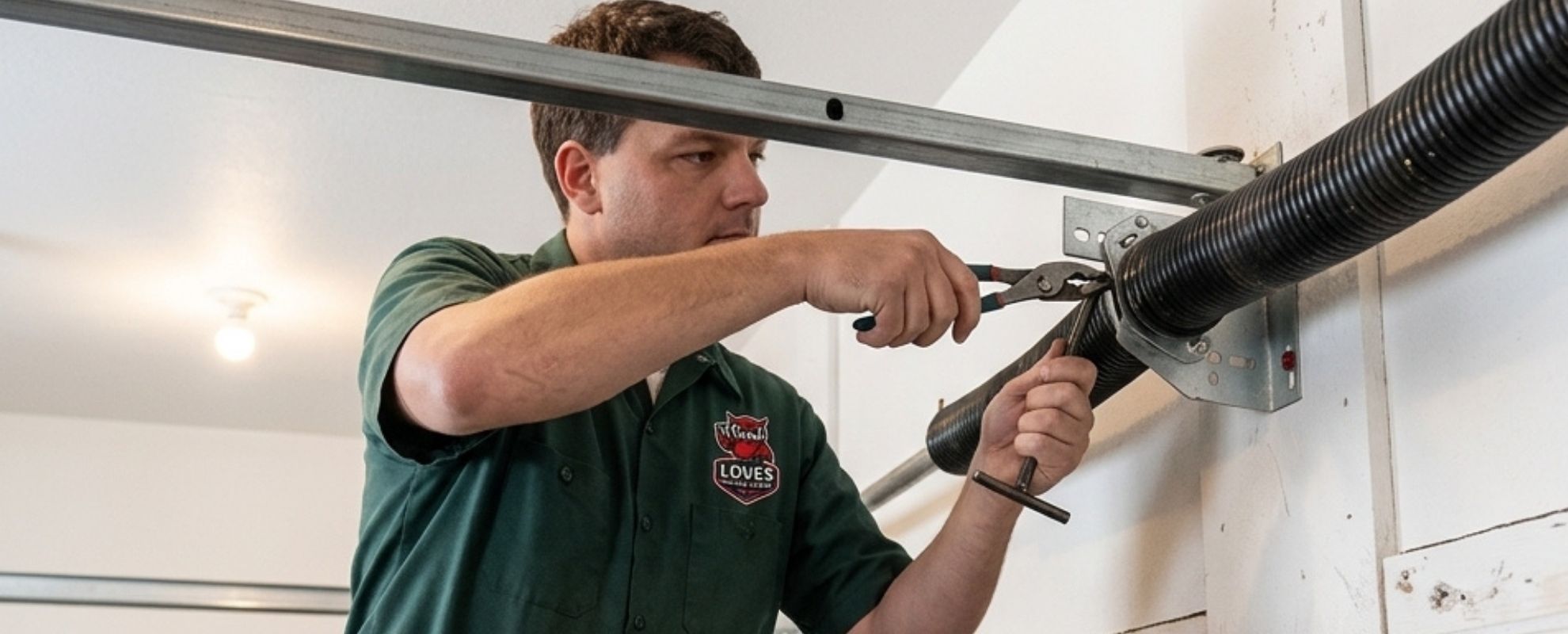
When comparing torsion vs extension springs, the first thing to understand is the mechanical difference. Torsion springs are mounted horizontally above the garage door opening on a metal shaft. As the door closes, the spring winds up and stores mechanical energy. When the door opens, that stored energy is released, helping to lift the door with minimal effort from the opener motor. Because the spring rotates around a fixed shaft, the force is distributed evenly across the entire door width, resulting in a smoother, more balanced operation.
Extension springs, on the other hand, are mounted on both sides of the door, running along the horizontal tracks above the upper door panels. These springs stretch and extend as the door closes, storing energy through elongation rather than rotation. When the door opens, the springs contract and pull the door upward. Extension springs typically require safety cables threaded through the center to prevent the spring from becoming a dangerous projectile if it snaps. While extension springs are commonly found on older or lighter residential garage doors, they tend to wear out faster and may cause the door to operate less smoothly over time.
For many Phoenix homeowners, the choice between torsion vs extension springs comes down to the age and design of their garage door system. Newer door installations almost always use torsion springs because of their superior durability and smoother performance. However, if your home has a lower ceiling clearance in the garage, extension springs may be the only practical option. A qualified technician from Loves Garage Doors can evaluate your specific setup and recommend the best solution for your home and budget.
- Torsion springs last significantly longer than extension springs, often handling more cycles before needing replacement.
- Extension springs are typically less expensive upfront but may require more frequent replacements over the life of the door.
- Torsion spring systems provide more balanced lifting force, reducing wear on the garage door opener motor.
- Extension springs require safety cables to minimize injury risk in the event of a spring break.
- Torsion springs are quieter during operation, which matters for Phoenix homeowners with living spaces adjacent to or above the garage.
- Both spring types can fail without warning, making regular inspections by a licensed professional critically important.
- Upgrading from extension to torsion springs is often possible and can improve the overall performance and safety of your garage door system.
Torsion vs Extension Springs: Choosing the Right Option for Phoenix Homeowners
Choosing between torsion vs extension springs is not just a mechanical question — it is a practical decision that affects your daily routine, your home’s security, and your long-term maintenance costs. Phoenix homeowners deal with extreme heat, which can affect the metal components of any spring system. High temperatures can cause springs to lose tension faster, especially in garages without climate control. Torsion springs, because of their more compact and durable design, tend to hold up better under these conditions than extension springs.
If you are exploring your options for a spring upgrade or replacement, you can browse the full list of available Services offered by Loves Garage Doors to get a better idea of what solutions are available for your specific situation. From single-spring torsion systems to dual-spring setups for heavier doors, Loves Garage Doors has the expertise and inventory to handle any residential spring project in the Phoenix area. All work is performed by licensed, bonded, and insured technicians who stand behind every repair with a satisfaction guarantee.
Homeowner pain points around garage door springs are real and often urgent. A broken spring means your car is stuck in the garage, your home is less secure, and your schedule is thrown off. The good news is that Loves Garage Doors offers fast response times and free estimates so Phoenix homeowners never have to wait long for a solution. Whether you need a simple spring adjustment or a full system upgrade from extension to torsion, the team is equipped to get the job done right the first time.
- Inspect your garage door visually each month, looking for signs of wear, rust, or uneven movement that may indicate spring trouble.
- Listen for unusual sounds like grinding, squeaking, or a loud bang, which often signal that a spring is failing or has already broken.
- Do not attempt to manually open a garage door if you suspect the spring is broken, as the full weight of the door could cause serious injury.
- Call a licensed professional like Loves Garage Doors at (602) 574-8588 to schedule a free spring inspection and get an honest assessment.
- Ask your technician to explain whether your current system uses torsion or extension springs and whether an upgrade would benefit your home.
- Review the free estimate provided, which will outline the cost of parts and labor with no hidden fees or surprises.
- Schedule the repair promptly, as a failing spring puts additional stress on the garage door opener and other hardware components.
FAQ: Torsion vs Extension Springs
What is the main safety difference between torsion vs extension springs?
Torsion springs are generally considered safer because they are contained on a central shaft and tend to stay in place even if they break. Extension springs, when they snap, can become dangerous projectiles if safety cables are not properly installed. Both types should only be serviced by a licensed, bonded, and insured professional to avoid the risk of serious injury. If you are unsure which type your garage door uses, Loves Garage Doors can inspect the system and advise you on any safety concerns.
How do I know if my Phoenix home needs torsion vs extension springs?
The easiest way to tell is by looking at your garage door system. If you see a single large spring mounted horizontally above the center of the door on a metal shaft, you have a torsion spring system. If you see two springs running along the sides of the door on the horizontal tracks, those are extension springs. If you are still unsure or if you want a professional evaluation, call Loves Garage Doors at (602) 574-8588 for a free inspection. Our team serves homeowners throughout Phoenix, Arizona and the surrounding area.
Can I upgrade from extension springs to torsion springs?
In most cases, yes. Upgrading from extension to torsion springs is a popular choice for Phoenix homeowners who want a quieter, smoother, and more durable garage door system. The upgrade requires proper measurements, the right spring specifications for your door’s weight and size, and professional installation to ensure everything is balanced correctly. Loves Garage Doors offers free estimates on spring upgrades and can walk you through the process from start to finish. Contact us through the Contact page or call directly to get started.
Conclusion
Understanding the difference between torsion vs extension springs is an important step for any Phoenix, Arizona homeowner who wants to keep their garage door safe, reliable, and running smoothly. Torsion springs offer greater durability, quieter operation, and improved safety, while extension springs remain a practical option for certain door configurations and budgets. No matter which system your home currently uses, regular inspections and timely repairs are essential to avoiding costly breakdowns and maintaining the security of your property.
Loves Garage Doors is proud to serve the Phoenix community as a licensed, bonded, and insured garage door company with a commitment to honest pricing, quality workmanship, and satisfaction-guaranteed results. Our team understands the unique challenges that the Phoenix climate presents for garage door hardware, and we are equipped to handle everything from minor spring adjustments to full system replacements. Free estimates are always available so you know exactly what to expect before any work begins.
Call Loves Garage Doors for a free spring inspection. Call: (602) 574-8588